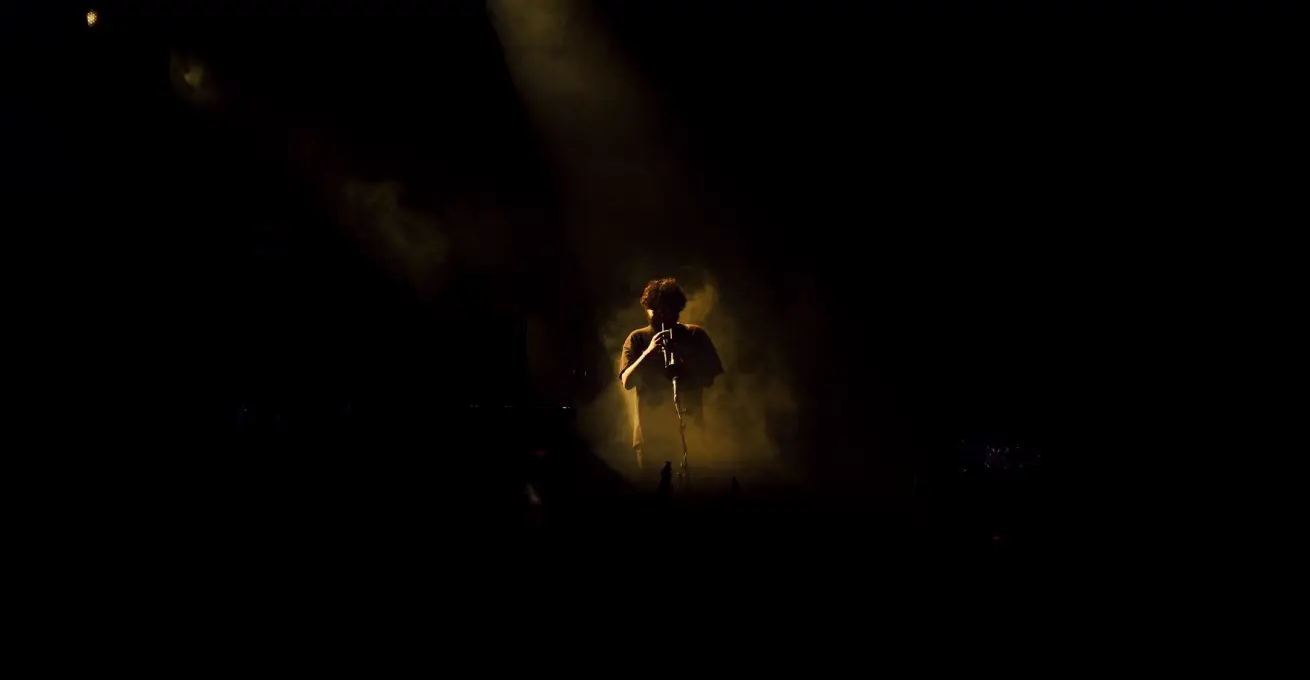
Marcus produces a small series of recorded concerts in a converted hall outside Oxford, and he contacted us in the early weeks of autumn with a problem he described very simply: the stage looked wonderful to the people sitting in it and dull on the monitors. He had a rig that had been assembled over several seasons, a few borrowed fixtures and a lighting operator who knew the room well. What he lacked was a plot written with the cameras in mind.
I visited the hall on a quiet weekday, before any band had arrived, and walked the stage with a tape measure and a notebook. I noted the ceiling height, the position of the two camera platforms, the distance from the back wall to the performers and the colour of the drapes. None of this is glamorous, but a lighting plot begins with a room as it really is, not with the fixtures we would like to hang.
Marcus invited me to the first rehearsal with the existing rig still in place, and this turned out to be the most useful hour of the project. From the floor, the stage glowed. On the camera monitors, the singer's face sat in a flat pool of light, the drummer vanished into the dark backdrop, and the bright blue wash that looked so rich in the room had turned a muddy purple on screen.
The cause was ordinary. Most of the key light came from the sides at a steep angle, which suits an audience but gives a camera hard shadows under the brow. The wash fixtures were also far too strong compared with the faces, so the cameras closed their iris to cope and everything else fell away. Seeing it on a monitor, rather than imagining it, settled the argument quickly.
- Steep side light left hard shadows on faces
- Saturated blue wash read as purple on camera
- Backdrop and drum riser fell into black
I started again from the camera positions. Two cameras shoot from the front, one from a raised platform and one at floor level, so the key light had to arrive from roughly the same side as each lens, only higher and a little off axis. We moved four fixtures to a front truss, softened them with diffusion and set them to a warmer white than the room had been using, which gave skin a natural tone without any correction in the gallery.
Behind the performers we kept colour but reduced its strength, so that the backdrop gave depth rather than competing with faces. A modest backlight on the singer and the drummer separated each of them from the drapes. I wrote all of this as a plot with fixture positions, focus notes and a short cue list, because a drawing that the house crew can follow is worth more than my presence on the night.
- Key light moved to the front truss, higher and softened
- Wash colours reduced in strength
- Backlight added for the singer and drummer
A plot only proves itself when someone watches the output. On the second rehearsal day I sat beside Marcus's vision mixer and asked her to cut through the shots while the band ran a song. She spotted two things I had missed from the floor: a bright reflection on a cymbal that flared when the lead light came up, and a spot where the guitarist stepped outside the key light during a solo.
We adjusted the cymbal flare by shifting one fixture a few degrees and dimming it slightly, and we widened the beam on another so the guitarist stayed lit across his whole range of movement. These are small corrections, yet they are the ones viewers notice, and they only come from watching the programme feed rather than the stage.
Not everything changed, and I think that is worth saying. Marcus's operator had built a lively set of effects for the louder songs, with moving beams and a few quick colour chases that the audience in the hall clearly enjoyed. We kept them, but limited how bright they could go and gave them their own cues so that they never overwhelmed the faces during a close shot.
The aim was never to make the show look like a studio. A concert should feel like a concert, with some drama and some risk. What we wanted was for the cameras to receive enough clean light on the performers that the drama could be seen at home, and for the operator to retain a rig he understood and could run without me.
By the time the series was recorded, Marcus had a written plot, a labelled fixture list and a one-page note of camera positions that his crew could reuse in the same hall. He told me afterwards that the greatest change was not the look of any single song but the reduced time spent fixing colour and exposure in the gallery, because the pictures arrived closer to what he wanted.
I would not claim that every venue needs the same treatment. This one had a particular ceiling, a particular set of cameras and a particular crew. The method, though, is worth repeating anywhere: measure the room, watch it on a monitor, build the plot from the lens outwards and check it with the person cutting the programme.
Marcus's case reminds me that stage lighting and camera lighting are two separate jobs that happen to share the same fixtures. A room can look generous to the eye and thin on screen, and the only honest test is to watch the output. If you are planning a recorded show this season, start with your camera positions, rehearse with the monitors on, and write the plot down so your crew can repeat it.